
Dental Marketing Guide: How to Grow a Dental Practice in the USA
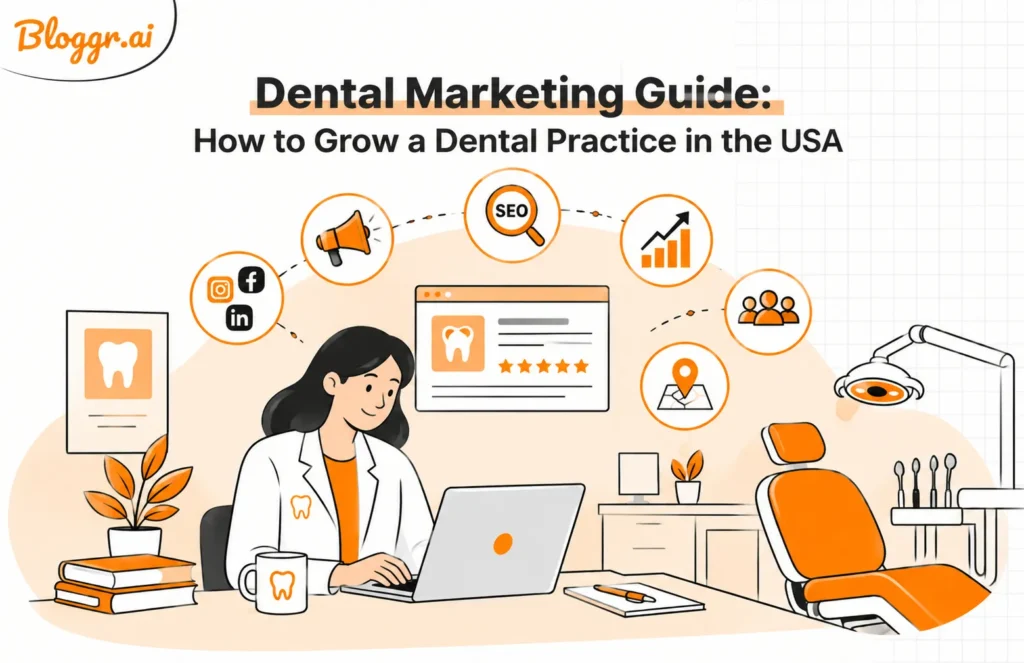
Scaling a private dental practice or regional DSO in the United States is no longer as simple as sending direct-mail postcards or running a basic Google Ads campaign. With corporate dental support organizations (DSOs) consolidating local markets, declining PPO reimbursement rates, and rising advertising costs, practice owners must treat patient acquisition as a high-precision operating system.
Growing a dental practice requires synchronizing local search visibility, HIPAA-compliant tracking infrastructure, automated review generation, and multi-channel patient retention. This comprehensive guide outlines the exact frameworks, unit economics, and marketing strategies required to build predictable patient flow and scale production in the competitive US dental landscape.
1. The Economics of US Dental Marketing: Key Benchmarks & Unit Economics
Before deploying capital into paid media or search engine optimization, practice owners must understand the unit economics of their clinical production. A successful growth strategy relies on aligning your digital marketing funnel with actual operatory capacity, chair utilization rates, and procedure margins.
The Dental Acquisition Formula
- Target Patient Acquisition Cost (PAC): 15% to 20% of first-year production value.
- Target Lifetime Value (LTV) to PAC Ratio: 4:1 to 6:1.
- Minimum Healthy Return on Ad Spend (ROAS): 4:1 across paid channels.
US Dental Marketing Benchmarks
The following breakdown illustrates realistic acquisition costs, production values, and conversion expectations across standard dental service categories in the US market:
| Procedure Category | Avg. Production Value (Year 1) | Target Cost Per Lead (CPL) | Target Patient Acquisition Cost (PAC) | Target Show-Up Rate |
| General / Hygiene (PPO/FFS) | $850 – $1,400 | $35 – $75 | $150 – $275 | 85% – 90% |
| Clear Aligners (Invisalign/SureSmile) | $4,500 – $6,500 | $80 – $160 | $550 – $950 | 70% – 80% |
| Single Tooth Implants | $3,500 – $5,500 | $95 – $210 | $650 – $1,200 | 75% – 85% |
| Full-Arch Restorations (All-on-4/6) | $22,000 – $35,000 | $220 – $450 | $1,800 – $3,500 | 65% – 75% |
| Cosmetic (Veneers / Makeovers) | $8,000 – $20,000 | $110 – $250 | $800 – $1,800 | 70% – 80% |
Budget Allocation Guidelines
- Established Practices (Maintenance & Steady Growth): Allocate 4% to 7% of monthly gross collections to marketing.
- Aggressive Growth / Multi-Doctor Expansion: Allocate 8% to 12% of target gross collections.
- De Novo / Scratch Practices: Commit to a fixed spend of $5,000 to $10,000/month for the first 6–12 months to reach break-even chair utilization.
2. Legal & Technical Infrastructure (HIPAA Compliance & Attribution)
Marketing a healthcare practice in the US involves strict compliance standards. The Department of Health and Human Services (HHS) and Office for Civil Rights (OCR) enforce strict rules regarding Protected Health Information (PHI) and online tracking technologies.
Navigating Pixel Tracking & HIPAA Regulations
Directly embedding standard Meta Pixels or standard Google Analytics (GA4) tags on pages where users book appointments or view condition-specific dental content can violate HIPAA if IP addresses or identifiers are shared without patient authorization.
To ensure compliance:
- Execute Business Associate Agreements (BAAs): Use specialized healthcare customer data platforms (such as Freshpaint or Liine) that sit between your website and advertising networks to manage data governance.
- Implement Server-Side Tracking: Strip all identifiable patient data (names, emails, appointment reasons) before transmitting non-PHI event signals back to Google or Meta for conversion optimization.
- Audit Analytics Workflows: Apply proven digital marketing analytics best practices to ensure your conversion reporting does not inadvertently log protected health data in raw event parameters.
PMS Integration & Real-Time Scheduling
Static contact forms create front-desk friction and lead decay. Integrating your Practice Management Software (PMS)—such as Dentrix, Open Dental, or Eaglesoft—with modern scheduling software like NexHealth, LocalMed, or Dental Intelligence allows prospective patients to book live chair time 24/7.
- Static “Request an Appointment” Forms: Average a modest 12% to 18% lead-to-chair conversion rate due to follow-up delays.
- Live 2-Way PMS-Integrated Direct Booking: Consistently delivers a 48% to 64% lead-to-chair conversion rate by locking in commitments immediately.
Call Tracking & Dynamic Number Insertion (DNI)
Over 65% of high-intent dental inquiries happen over the telephone. To measure true campaign ROI, deploy HIPAA-compliant call tracking software using Dynamic Number Insertion (DNI). This attributes incoming calls directly to specific Google Ads keywords, local SEO campaigns, or social media ads while maintaining strict privacy protocols.
3. Local SEO & Google Maps: Dominating the 3-Pack in Your Zip Code
When prospective patients experience a cracked tooth or search for a new family dentist, their journey begins in the Google Local 3-Pack. Building a market-leading local presence requires executing a specialized SEO for dentists blueprint that establishes geographical relevance and trust.
Key Pillars of the Google 3-Pack Ranking Engine
- Google Business Profile Categories: Setting the optimal primary and secondary classifications.
- Proximity & Citation Authority: Consistent Name, Address, and Phone (NAP) data across national medical directories.
- Review Velocity & Sentiment: Continuous stream of high-rating patient feedback with localized procedure keywords.
Google Business Profile (GBP) Optimization Architecture
Your Google Business Profile is your primary local conversion engine. To optimize it effectively:
- Primary Category Selection: Set your primary category to Dentist (or your core specialty, such as Pediatric Dentist, Orthodontist, or Periodontist).
- Secondary Categories: Add relevant secondary categories: Cosmetic Dentist, Emergency Dental Service, Dental Implants Periodontist, and Teeth Whitening Service.
- Service Menus: Populate every sub-service with accurate descriptions, starting price ranges, and direct booking links.
- Photo Cadence: Upload 3–5 high-resolution, unedited photos of your real clinical team, operatory suites, and exterior signage weekly to reinforce local authority.
Structured Local Data & Citations
Search engines cross-reference national and medical directories to verify your practice’s physical location. Maintain strict Name, Address, and Phone (NAP) consistency across major directories, including the ADA Member Directory, Healthgrades, Zocdoc, CareDash, and WebMD. Understanding what citations are in SEO helps protect your practice against split listings or incorrect location markers that dilute local rankings.
Make sure your technical team configures structured data (Schema.org) on your website. Key properties should include:
- Practice name, official logo, and geo-coordinates matching your Google Map pin.
- Opening hours, telephone numbers, and accepted payment/insurance methods.
- Medical procedure entities linking each service page to verified clinical definitions.
Regularly execute a comprehensive local SEO audit to resolve duplicate Google Maps pins, clean up legacy suite numbers, and audit local schema markup.
As search habits shift toward conversational discovery, practices must also recognize why local SEO is important in AI search. Search engines and generative platforms surface local recommendations based on semantic clarity, direct schema definitions, and strong local authority signals.
4. Automated Reputation Management & Review Acquisition
Social proof is the single largest conversion lever in dental marketing. Patients inherently fear dental procedures; transparent, authentic reviews remove psychological barriers to booking.
The 15-Minute Post-Appointment SMS Protocol
The probability of a patient writing a detailed review drops by more than 60% if the request is delayed past the day of treatment.
- Automate via API: Connect platforms like Birdeye, Podium, or Swell directly to your PMS checkout trigger.
- The Golden Window: Schedule the SMS to deliver exactly 15 to 20 minutes after the patient leaves the operatory.
- Direct Deep-Linking: Ensure the link opens directly in the native Google Maps app review interface, eliminating unnecessary login steps.
Responding to Negative Reviews Without Violating HIPAA
Responding to negative reviews requires extreme caution. Never confirm that the reviewer is or was a patient in your practice. Acknowledging treatment or appointment history publicly constitutes a HIPAA violation.
Compliant Review Response Template:
“Thank you for sharing your feedback. Due to federal privacy regulations, we cannot discuss individual patient care or confirm whether someone has visited our office. However, our practice is dedicated to delivering the highest quality clinical care and patient experience. Please reach out directly to our Office Manager at [Direct Phone Number] so we can address your concerns privately.”
5. Paid Patient Acquisition: Google Ads vs. Meta Ads
Achieving consistent patient growth requires deploying capital across both high-intent search platforms and visual demand-generation channels. Understanding modern search engine marketing strategies allows you to balance immediate, high-intent emergency needs with profitable elective procedures.
Paid Media Strategy Breakdown
| Channel | Search Intent Level | Best Suited Procedures | Key Strategic Focus |
| Google Search Ads | High / Immediate Need | Emergency, Dental Implants, Root Canals, Family Dentistry | Strict negative keyword lists, exact-match keyword bidding |
| Meta Ads (FB/IG) | Passive / Discovery | Invisalign, Veneers, Whitening, In-House Membership Plans | Video storytelling, doctor chairside explanations, lead filtering |
Google Search Ads: Capturing Bottom-of-Funnel Demand
Google Ads is the fastest route to capturing patients who need treatment immediately.
- Campaign Segmentation: Never mix emergency keywords with elective cosmetic keywords in the same ad group. Maintain separate budgets for:
- General / Family Dentistry
- Emergency & Tooth Pain
- Restorative & Dental Implants
- Cosmetic Dentistry
- Aggressive Negative Keyword Management: Prevent wasted ad spend by adding negative keywords such as: Medicaid, cheap, free, Denti-Cal, dental school, DIY, salary, jobs, instruments, CE courses.
- Geo-Fencing Tight Radiuses: Set your target ad radius to 3–7 miles around your physical office in suburban markets, or 1–3 miles in dense urban settings.
Meta Ads (Facebook & Instagram): Driving Elective Cosmetic Cases
Meta Ads excel at visual, lifestyle-oriented procedures such as clear aligners, porcelain veneers, and smile restorations.
- Video-First Hooks: Use chairside commentary from the dentist explaining how clear aligners work or breaking down a smile makeover process.
- Lead Qualification Forms: For high-ticket procedures ($5,000+), use Meta On-Platform Instant Forms with qualifying questions (such as “How soon are you looking to start treatment?” and “Are you interested in monthly financing options?”) before directing qualified leads to your front-desk intake team.
6. High-Converting Dental Website Architecture (CRO)
Driving traffic to an outdated, slow website wastes your marketing budget. Your website must act as a digital treatment coordinator that builds trust, addresses financial concerns, and simplifies appointment scheduling.
Essential Above-the-Fold Website Elements
- Direct Booking Engine: An always-visible scheduling button in the header and hero section.
- Financial Transparency: Accepted PPO insurance badges alongside financing partners (CareCredit, Sunbit, Proceed Finance).
- Click-to-Call Accessibility: Sticky mobile phone buttons that dial your front desk instantly.
- Authentic Team Imagery: Real clinical photos of the doctors and staff rather than generic stock photography.
Establishing Clinical Credibility & E-E-A-T
Healthcare websites fall under Google’s “Your Money or Your Life” (YMYL) quality standards. Clear clinical transparency directly impacts search visibility and patient trust. Incorporating established standards for why E-E-A-T is Google’s top trust signal requires:
- Highlighting verifiable doctor credentials (DDS/DMD, AGD, AACD, ICOI fellowship designations).
- Displaying real clinical before-and-after photography with appropriate patient releases.
- Publishing educational procedure guides written and reviewed by licensed dental practitioners.
To maximize search click-through rates across all procedure landing pages, use a dedicated meta description generator to craft compelling, localized metadata that highlights emergency availability and financing terms.
In-House Dental Membership Plans
With millions of Americans lacking dental insurance, uninsured prospective patients often avoid necessary care due to fee uncertainty.
- The Solution: Create an in-house dental membership plan (e.g., 30–40/month covering 2 hygiene cleanings, annual exams, digital X-rays, and a 15% discount on restorative care).
- Software Tools: Manage recurring subscriptions using platforms like Kleer or Plan Forward to build predictable monthly recurring revenue (MRR) while eliminating insurance write-offs.
7. Patient Retention & Reactivation (Maximizing Practice Lifetime Value)
The most cost-effective source of production revenue is the patient base already sitting in your Practice Management Software. Practice growth stalls when attrition cancels out new patient acquisition.
Multi-Touch Reactivation Cadence
- Hygiene Due Date + 30 Days: Automated personalized SMS with a direct 1-click booking link.
- Hygiene Due Date + 60 Days: Educational email detailing the health risks of delayed preventative cleanings.
- Hygiene Due Date + 90 Days: Personalized outreach or ringless voicemail from the doctor or lead hygienist.
- End of Year (October – December): Targeted “Use Your Remaining Insurance Benefits Before They Expire” campaign.
Unscheduled Treatment Follow-Up
Tens of thousands of dollars in diagnosed treatment (crowns, nightguards, deep cleanings) leave dental practices uncompleted every month.
- Automate Pipeline Reminders: Trigger automated SMS and email reminders 7, 14, and 30 days after an unaccepted treatment plan is presented in the operatory.
- Remove Financial Friction: Highlight third-party healthcare financing options (CareCredit, Sunbit, Proceed Finance) directly inside digital follow-up messages to resolve upfront cost hesitation.
8. 90-Day Implementation Roadmap for US Practices
Executing a comprehensive dental marketing strategy requires a structured, phase-by-phase rollout. Begin by conducting a thorough digital marketing audit step-by-step to evaluate existing platform access, historical conversion data, and tracking integrity.
Phase 1: Days 1–30 (Infrastructure & Local Visibility)
- Audit and optimize Google Business Profile categories, service menus, and operating hours.
- Clean up NAP listings across primary healthcare directories (Healthgrades, WebMD, ADA).
- Deploy HIPAA-compliant server-side tracking and call tracking with Dynamic Number Insertion (DNI).
- Integrate automated review request software (Birdeye/Podium) with your PMS checkout workflow.
- Configure dental and local business schema markup across primary website pages.
Phase 2: Days 31–60 (High-Intent Acquisition & CRO)
- Launch geo-targeted Google Ads campaigns targeting Emergency, Implant, and General Dentistry terms.
- Add negative keyword filters to block irrelevant and low-intent searches.
- Upgrade website hero sections with direct, real-time online appointment booking.
- Launch automated multi-channel recall sequences for patients overdue for hygiene cleanings by 6+ months.
- Implement front-desk call coaching and lead response training to maintain an 85%+ show-up rate.
Phase 3: Days 61–90 (Elective Scale & Lifetime Value)
- Launch targeted Meta ad campaigns for Invisalign, porcelain veneers, and cosmetic smile makeovers.
- Roll out and market an in-house dental membership plan to reactivate uninsured inactive charts.
- Implement automated follow-up workflows for unscheduled high-dollar treatment plans.
- Conduct end-of-quarter ROI and attribution audits to reallocate budget to top-performing campaigns.
Frequently Asked Questions (FAQs)
What is the average marketing budget for a private dental practice in the USA?
Established dental practices focused on steady growth typically allocate 4% to 7% of gross monthly collections to marketing. Rapidly growing practices, multi-location clinics, or scratch practices looking to fill empty operatories should budget 8% to 12% of target gross revenue (or a fixed spend of $5,000 to $10,000/month) until chair capacity reaches target benchmarks.
How long does dental SEO take to generate new patient appointments?
Foundational technical SEO and Google Business Profile optimizations typically begin driving measurable increases in map pack impressions and phone calls within 60 to 90 days. Ranking organically for competitive, high-production keywords (such as “dental implants [city]” or “Invisalign provider near me”) generally takes 4 to 8 months of consistent citation building, content optimization, and review generation.
Is Zocdoc or Google Ads better for acquiring new dental patients?
Both channels serve distinct functions within a dental growth strategy:
- Zocdoc operates as a pay-per-booking marketplace. It provides fast access to new patients but offers limited brand differentiation and higher long-term acquisition costs for general cleanings.
- Google Ads builds equity for your own practice brand, gives you complete control over messaging and landing page conversion funnels, and delivers higher ROI when targeting profitable, high-ticket restorative and cosmetic procedures.
How can a dental practice legally run Meta and Google ads under HIPAA rules?
To run ad campaigns in compliance with HHS/HIPAA guidelines:
- Never transmit Protected Health Information (PHI)—including patient names, email addresses, phone numbers, or appointment conditions—through standard client-side browser pixels.
- Implement server-side tracking pipelines through HIPAA-compliant customer data platforms that execute Business Associate Agreements (BAAs).
- Ensure unauthenticated public landing pages do not collect or share sensitive health status identifiers without explicit user consent.
What is the most effective marketing strategy for full-arch dental implants?
Full-arch restorations (such as All-on-4 or All-on-6) require an educational, trust-driven sales funnel:
- High-Intent Search Ads: Bid on long-tail Google Search terms like “full mouth dental implants cost” or “teeth in a day near me.”
- Video Testimonials: Showcase detailed, emotional patient transformation stories discussing the functional and aesthetic impact of treatment.
- Transparent Financing Guides: Provide clear breakdowns of monthly financing options (such as CareCredit or Proceed Finance), as upfront cost is the primary barrier to case acceptance for restorative patients.